Weekly Market Update: 17 December 2025

Markets Weigh Strong Fundamentals Against Weak Price Action
The market finds itself at a clear inflection point. Some of the most significant institutional developments of the cycle have emerged over the past fortnight, yet price action has continued to weaken as crypto trades into a low-liquidity holiday period. This growing disconnect between fundamentals and price has fuelled debate around cycle dynamics, manipulation and whether traditional patterns are still holding. Over the week, Bitcoin fell 5.63%, briefly tagging $85K, while Ethereum declined 10.9% and is trying to reclaim the $3K level.
Despite the drawdown in majors, some large institutional players added on this dip. Strategy purchased an additional $980.3M in Bitcoin at an average price of $92,098, lifting total holdings to approximately $59.96B at an average cost of $74,972. On the Ethereum side, BitMine announced it added 102,259 ETH over the past week, valued at roughly $300M. While price remains under pressure, this divergence between market action and institutional behaviour highlights the contrasting time horizons shaping the current environment.
JPMorgan's Tokenized Money Fund: Banking Meets Ethereum
JPMorgan Chase launched its first tokenised money market fund on the Ethereum blockchain in December 2025, marking a vital pivot for traditional finance's integration with decentralised infrastructure. The money fund, called My OnChain Net Yield Fund (MONY), will be funded by JPMorgan themselves with $100 millions of its own capital and the open it to qualified investors next week. The fund operates on Ethereum's main public network, making it the largest GSIB (global systemically important bank) to launch a money market fund on a public blockchain.
MONY invests in traditional short-term debt instruments including US Treasury securities and fully collateralised repurchase agreements, structured like traditional money market funds but tokenised as tokens on the Ethereum blockchain. Investors can subscribe and redeem shares using either traditional US dollars or USDC stablecoin, with settlements occurring within hours rather than the typical T+2 days for traditional funds. The fund operates 24/7 on-chain, enabling round-the-clock accessibility.
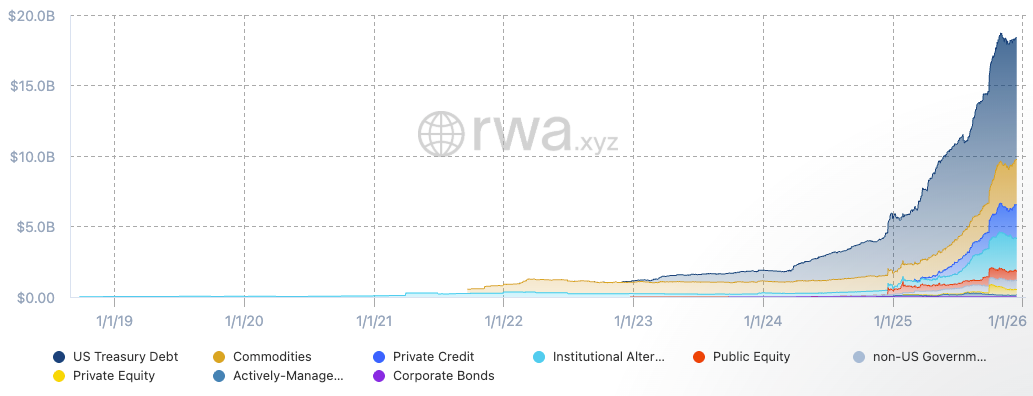
JPMorgan built MONY using Kinexys Digital Assets, the bank's blockchain infrastructure division. The strategic significance lies in JPMorgan choosing Ethereum's public mainnet over faster alternatives, prioritising security and liquidity over speed. This validates public blockchain viability for regulated finance and represents a shift from private blockchains toward transparent, composable on-chain infrastructure. The total tokenised real-world assets market reached over $15 billion in 2025 and continues to grow at a rapid pace.
NASDAQ's Push Toward 24/7 Trading
NASDAQ has filed with the SEC to extend US equity trading to 23 hours daily, excluding holidays, with one pause for technical break or maintenance break. The primary driver is demand from Asia-Pacific investors seeking to trade US stocks during their daytime hours rather than overnight. Implementation requires the Depository Trust & Clearing Corporation (DTCC) to operate clearing and settlement continuously Sunday through Friday, with target implementation in Q2 2026, while Securities Information Processors must extend market data feeds accordingly.
However, extending trading hours could fragment already-concentrated liquidity, widening bid-ask spreads and increasing volatility during thin overnight sessions. Banks estimate massive costs for overnight staffing and technology infrastructure without guaranteed revenue returns. The crypto side offers an intriguing parallel and potential convergence point. Cryptocurrency markets already operate 24/7 on decentralised exchanges (DEXs) like Hyperliquid. And decentralised finance (DeFi) such as Uniswap, and PancakeSwap, which use automated market makers (AMMs) that provide continuous liquidity through smart contract-managed liquidity pools rather than traditional order books. These platforms allow anyone to become a liquidity provider and enable instant peer-to-peer trading at any hour without intermediaries.
NASDAQ separately proposed trading tokenised securities, or blockchain-based representations of stocks, which already trade continuously on crypto platforms. Whether traditional and decentralised markets eventually converge remains speculative, though the infrastructure being built for extended hours including continuous clearing and blockchain-based settlement could theoretically bridge these worlds. Some view tokenised stocks as demonstrating efficiencies blockchain technology could bring to broader market infrastructure. However, philosophical differences remain substantial with crypto markets prioritising decentralisation and permissionless access operating outside regulatory frameworks, while NASDAQ emphasizes operating within existing securities laws and leveraging traditional structures.

Hyperliquid ETF and Supply Burn Proposal
Hyperliquid continues to differentiate itself from the broader market, both in positioning and institutional attention. Bitwise, one of the largest and most established crypto asset managers, filed an amended registration for its Hyperliquid ETF, adding the final procedural steps typically seen ahead of a potential launch, including confirmation of the ticker $BHYP. For a protocol that is still relatively new, the speed of this progression is notable. Hyperliquid has moved ahead of many older, more established tokens by developing measurable usage, revenue, and market depth early, characteristics that institutions often assess when considering new exposures.
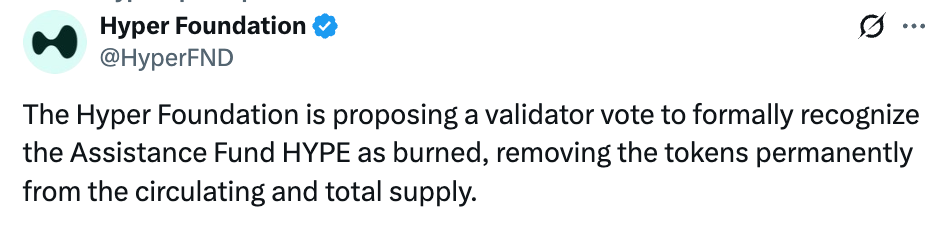
Today, Hyperliquid introduced a governance proposal targeting its Assistance Fund (AF) - protocol holdings from revenue/buybacks - supply, which currently represents over 10% of circulating $HYPE. The proposal would permanently burn all existing AF-held tokens and future AF buybacks, reducing circulating supply by roughly 13% and lowering FDV by approximately $1B at current prices. If approved, the protocol would shift toward a clearer structurally deflationary profile driven by ongoing buybacks. When viewed alongside a possible ETF product from a firm like Bitwise, these developments highlight how newer protocols are increasingly aligning with institutional frameworks around revenue visibility, transparency, and capital structure.
Ondo Chooses Solana as Infrastructure for Tokenised Markets
Solana saw several important developments this week that reinforce its positioning at the intersection of traditional finance and on-chain markets. Ondo Global Markets announced plans to bring tokenised U.S. stocks and ETFs to Solana, enabling non-U.S. users to trade real-world equities on-chain with 24/7 access and near-instant settlement. Ondo manages over $2B in tokenised assets, and its choice of Solana reflects the network’s low fees and high throughput qualities required to support high-volume, institutional-grade activity. While the platform is expected to launch in early 2026, the announcement highlights how Solana is increasingly being used as infrastructure for “Wall Street on-chain,” rather than purely crypto native applications.
At the protocol level, Solana reached an important reliability milestone with the launch of Firedancer, new software developed by Jump Crypto that helps operate the Solana network. Firedancer is now live and already supports roughly 20% of activity, reducing the risk that a single software issue could disrupt the entire system, a key improvement given Solana’s past outages. Over time, this also allows the network to handle significantly more activity without congestion. Alongside these upgrades, Solana ETFs continue to see steady demand, with approximately $714M in net inflows to date and a nine-day inflow streak. Taken together, these developments point to improving network resilience, expanding institutional usage, and deeper integration with traditional financial markets.
Coinbase's "Everything Exchange" Vision
Coinbase is unveiling several major product launches at its inaugural Product Showcase event on December 17, 2025, marking a significant expansion of its ambitions to become an "everything exchange." The exchange is suspected to announce prediction markets in partnership with Kalshi and an AI assistant named "Genie," alongside new stock trading capabilities. Further, according to Bloomberg, Coinbase will develop and launch its own tokenised stock offering, positioning the company to directly compete with retail brokers like Robinhood. CEO. Separately, Coinbase announced an expanded partnership with Standard Chartered Bank on December 12, 2025, to explore trading, prime services, custody, staking, and lending solutions for institutional clients.
Global Macroeconomic Snapshot: Fed Easing and BOJ Tightening
The Federal Reserve is navigating a complex macroeconomic environment marked by softening labor markets and persistent inflation. Last week the Fed cut its benchmark federal funds rate by 25 basis points to 3.5-3.75%, marking the third consecutive cut this year. Today the unemployment rate climbed to 4.6%, exceeding the expected 4.5% and the highest level since September 2021, reflecting sustained labor market weakness. Job growth has been modest, with only 64,000 positions added in November after losing roughly 105,000 in October.
Simultaneously, the Fed announced a major balance sheet pivot. The central bank recently commenced reserve management purchases starting with $40 billion this month in Treasury bills starting December 12. This strategy could inject adequate liquidity in money markets and prevent financial fragility during economic slowdowns, though the strategy risks anchoring inflation expectations higher if markets perceive sustained monetary accommodation rather than viewing it as temporary technical management.

In contrast, on the Eastern side of the world, The Bank of Japan is poised to raise its policy interest rate to approximately 0.75% from the current 0.5% at its monetary policy meeting scheduled for around December 18-20. This marks a significant tightening move as the BoJ continues gradually normalising rates after decades of ultra-loose monetary policy.
The Bank of Japan's anticipated rate hike to 0.75% threatens to unwind the massive yen carry trade, where investors borrow cheap yen at near-zero rates to invest in higher-yielding assets like US stocks, emerging market bonds, and cryptocurrencies. As Japanese rates rise and the yen strengthens, these positions become more expensive to maintain and more costly to repay in dollar terms, and can force liquidation of assets to cover yen-denominated debt.

Kane Bisogni


.jpg)
Bitcoin Vs XRP: What Separates Them (And Why Investors Care)

Weekly Market Update: 18 March 2026
Weekly Market Update: 11 March 2026
Weekly Market Update: 04 March 2026
Weekly Market Update: 25 February 2026
.jpg)
Crypto vs Stock Trading: Which Is The right Investment For You in 2026
.jpg)
How to Buy XRP in Australia: A Complete Guide for Beginners in 2026
Weekly Market Update: 18 February 2026
Weekly Market Update: 11 February 2026
Weekly Market Update: 04 February 2026
Weekly Market Update: 28 January 2026

What Does Liquidity Mean in Crypto? A Beginner’s Guide
%20(1).jpg)
How to Build a Diversified Crypto Portfolio
Weekly Market Update: 21 January 2026
Weekly Market Update: 14 January 2026

The Best Crypto Brokers and Trading Platforms for 2026
Weekly Market Update: 07 January 2026
Weekly Market Update: 24 December 2025
Weekly Market Update: 17 December 2025
Weekly Market Update: 10 December 2025
Weekly Market Update: 3 December 2025
Weekly Market Update: 26 November 2025
Weekly Market Update: 19 November 2025
Weekly Market Update: 12 November 2025
.jpg)
SMSF Crypto Investing Australia: A Complete Guide
Weekly Report 5th Nov

DeFi Explained: How Decentralised Finance Is Changing Traditional Banking (Australia, 2025 Edition)
.jpg)
Our Guide to Meme Coins in 2026: How to Pick a Winner
.jpg)
Smart Contract Hacks Australia: How Exploits Happen and How to Protect Your Crypto
.jpg)
Institutional Money in Crypto: How Big Investors Are Changing the Game
.jpg)
Crypto Outlook 2025: Has the Bull Market Been Interrupted or Just Reset?
.jpg)
How Crypto Is Changing the Way We Buy Luxury
.jpg)
Real-World Assets (RWA): The Dominant Crypto Sector of 2025
.jpg)
Crypto Market Manipulation: How Liquidity Squeezes Shape the Market
Weekly Market Update: 22 October 2025
Weekly Market Update: 8 October 2025
Weekly Market Update: 15 October 2025
.jpg)
Crypto Scams Australia: A Beginner’s Guide to Safe Investing
Weekly Market Update: 1 October 2025
Weekly Market Update: 24 September 2025
Weekly Market Update: 17 September 2025
Weekly Market Update: 10 September 2025

Buying Cryptocurrency as a Company: Everything You Need to Know

How to Buy and Sell Large Amounts of Cryptocurrency (Including Bitcoin, XRP, ETH) in 2026
Weekly Market Update: 3 September 2025
Weekly Market Update: 27 August 2025
Weekly Market Update: 20 August 2025
Weekly Market Update: 13 August 2025
Weekly Market Update: 6 August 2025
Weekly Market Update: 30 July 2025
Weekly Market Update: 23 July 2025
Weekly Market Update: 16 July 2025
Weekly Market Update: 9 July 2025
Weekly Market Update: 2 July 2025
Weekly Market Update: 25 June 2025
Weekly Market Update: 18 June 2025
Weekly Market Update: 11 June 2025
Weekly Market Update: 4 June 2025
Weekly Market Update: 28 May 2025
Weekly Market Update: 21 May 2025
Weekly Market Update: 14 May 2025
Weekly Market Update: 7 May 2025
Weekly Market Update: 27 March 2024
Weekly Market Update: 3 April 2024
Weekly Market Update: 10 April 2024
Weekly Market Update: 17 April 2024
Weekly Market Update: 24 April 2024
Weekly Market Update: 1 May 2024
Weekly Market Update: 8 May 2024
Weekly Market Update: 15 May 2024
Weekly Market Update: 22 May 2024
Weekly Market Update: 29 May 2024
Weekly Market Update: 6 June 2024
Weekly Market Update: 12 June 2024
Weekly Market Update: 19 June 2024
Weekly Market Update: 26 June 2024
Weekly Market Update: 4 July 2024
Weekly Market Update: 10 July 2024
Weekly Market Update: 17 July 2024
Weekly Market Update: 24 July 2024
Weekly Market Update: 31 July 2024
Weekly Market Update: 8 August 2024
Weekly Market Update: 14 August 2024
Weekly Market Update: 21 August 2024
Weekly Market Update: 28 August 2024
Weekly Market Update: 4 September 2024
Weekly Market Update: 11 September 2024
Weekly Market Update: 18 September 2024
Weekly Market Update: 25 September 2024
Weekly Market Update: 2 October 2024
Weekly Market Update: 9 October 2024
Weekly Market Update: 16 October 2024
Weekly Market Update: 23 October 2024
Weekly Market Update: 30 October 2024
Weekly Market Update: 6 November 2024
Weekly Market Update: 13 November 2024
Weekly Market Update: 20 November 2024
Weekly Market Update: 27 November 2024
Weekly Market Update: 4 December 2024